

Can a Vista Lemon Law Lawyer Still Help if Your Truck Has Aftermarket Parts?
By Brian K. Cline, Managing Attorney · Published
Yes, in many cases. A Vista lemon law lawyer starts with one question. Did the add-on cause the defect? California Civil Code section 1794.3 sets aside only a defect caused by unauthorized or unreasonable use after the sale, and the manufacturer has to prove that link. A lift kit does not cancel coverage for an unrelated failure.
Cline APC, A California Lemon Law Legal Group, handles claims under California's Song-Beverly Consumer Warranty Act from its offices in La Jolla and Poway. The firm serves truck owners across San Diego County, and Vista is part of that North County market. A modified truck raises a question a stock truck never does. Who caused the problem, the factory or the add-on?
Is your modified truck back at the dealer again? Call Cline APC at (888) 982-6915 for a free consultation, and keep your parts receipts close by.
Does an Aftermarket Part Void Your Truck's Lemon Law Rights in California?
No, not by itself. Civil Code section 1794.3 sets aside only a defect "caused by the unauthorized or unreasonable use of the goods following sale." The test is cause, which is why Cline APC's San Diego County lemon law practice starts a modified truck review by matching each complaint to each part. A part matters only when it caused the defect you are complaining about.
Picture a Vista pickup with a leveling kit and bigger wheels. Now the transmission slips, or the touchscreen keeps rebooting on the drive home. Neither problem has an obvious link to the kit or the wheels. The manufacturer still owes the warranty repair, and the lemon law still counts the visits. Whether the manufacturer has a real causal argument depends on the defect and the repair history. A lawyer reads both before giving you a view.
What Section 1794.3 Says and What It Leaves Alone
The full text of Civil Code section 1794.3 is one sentence. It says the warranty chapter does not apply to a defect or nonconformity caused by unauthorized or unreasonable use following sale. Two words carry the weight. "Caused" means the part has to produce the defect, not just sit on the truck. "Following sale" means the statute looks at how the truck was used and changed after it became yours.
Nothing in the section says a modification cancels the whole warranty. Nothing says a truck with one add-on loses lemon law protection for every other system. The exclusion runs defect by defect, which is how a claim on a modified truck gets sorted.
What the Federal Warranty Rules Add
The federal Magnuson-Moss Warranty Act points the same way. Section 2302(c) of Title 15 bars a warrantor from conditioning its warranty on your use of a brand-name part or service. One exception is a part or service the warranty provides free. The Federal Trade Commission's rule at 16 CFR 700.10(c) goes further. It says a warrantor cannot, as a matter of law, avoid liability where a defect is unrelated to the use of "unauthorized" parts or service.
The same rule still leaves the manufacturer one defense. It may exclude damage caused by unauthorized parts, and it may deny liability where it can demonstrate the defect was caused that way. So the federal rule and section 1794.3 ask the same thing. Did this part cause this problem?
Who Has to Prove the Lift Kit or Tuner Caused the Defect?
The manufacturer does. CACI No. 3220 is the jury instruction California courts use for this defense. It says the manufacturer avoids responsibility if it proves the defect was caused by unauthorized or unreasonable use after the sale. The instruction's source notes cite Jones v. Credit Auto Center, Inc. (2015) 237 Cal.App.4th Supp. 1. There, the court said the party claiming the exception had the burden to prove it.
Proof means evidence, not a remark at the service desk. A technician's note that reads "aftermarket lift installed" records a fact. It does not explain how the lift made a fuel pump fail or a door lock stop working. Whether a manufacturer can carry that burden turns on the defect, the part and the paperwork. A lawyer reviews all three before saying anything about how a claim might go.
When the Part and the Defect Share a System
Here the causation argument is strongest. A suspension lift and a clunk in the front end involve the same parts of the truck. So do an engine tuner and a check engine light, or a tuner and harsh transmission shifts. Expect the manufacturer to ask for diagnostic data, inspect the part and compare the symptoms with what the part changes.
Sharing a system still is not proof. A front-end noise can come from a factory part that would have failed on a stock truck, too. That is a question of evidence, and sometimes of expert testimony.
When the Part and the Defect Have Nothing in Common
In this group, the manufacturer's position is much weaker. A cold air intake has no obvious connection to a power window regulator. Running boards have nothing to do with a rebooting infotainment screen. Under 16 CFR 700.10(c), an unrelated aftermarket part does not let the warrantor avoid its warranty duty for that defect.
Owners in this spot sometimes hear a blanket answer at the counter, such as "the truck is modified, so nothing is covered." That answer does not match section 1794.3 or the federal rule. Ask for it in writing on the repair order.
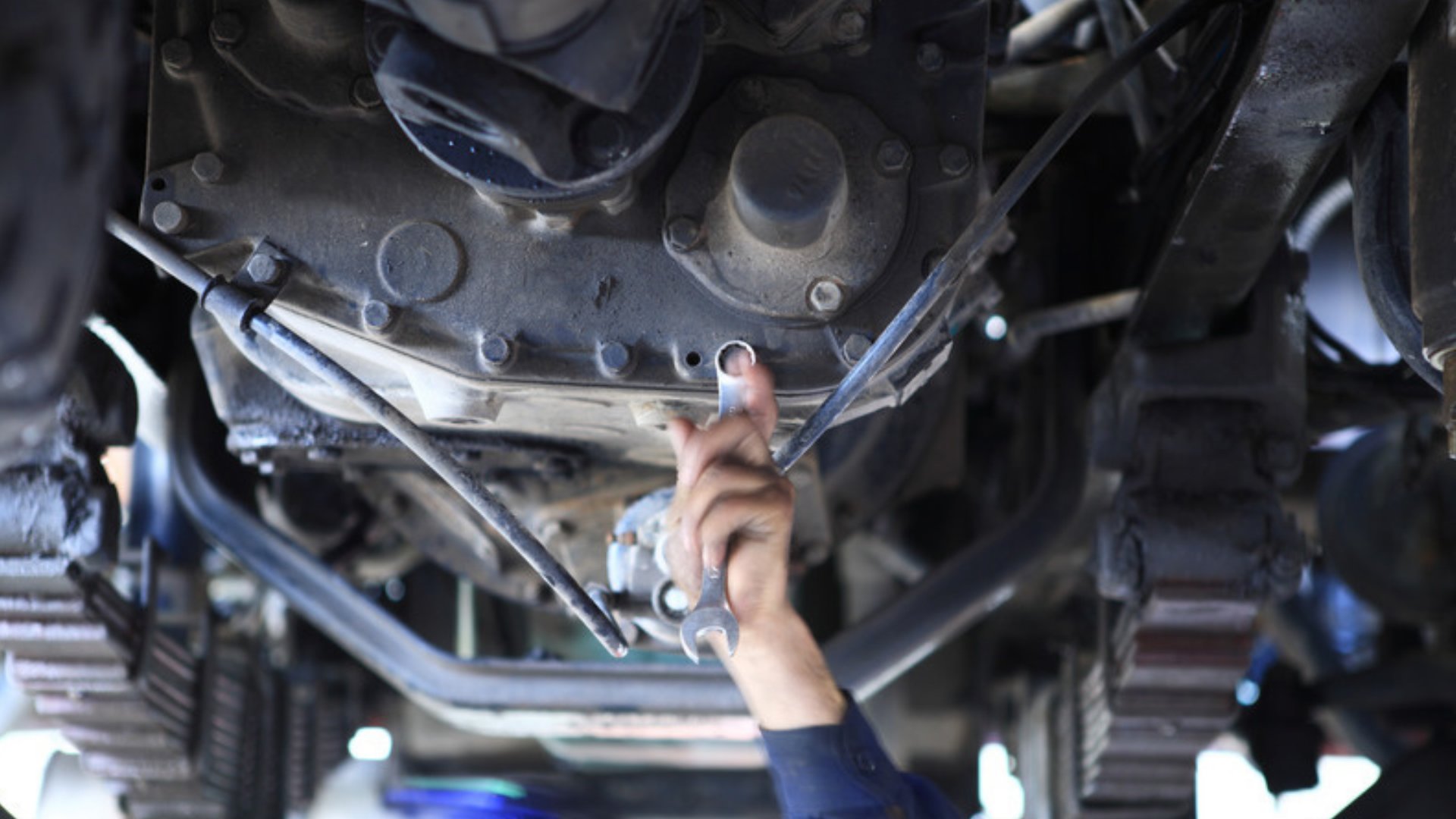
Which Truck Modifications Draw the Closest Look in a Lemon Law Claim?
The ones that touch the same system as your complaint. Section 1794.3 turns on cause, so a manufacturer reviewing a modified truck looks first at parts that change how the failing system works. Lift kits, tuners and work-truck upfits each raise their own version of that question.
None of these parts is banned by the lemon law. Each one simply gives the manufacturer something to examine. How much it matters depends on the specific defect, and that call belongs to a lawyer who has read your repair orders. A truck the dealer lifted before you bought it goes through the same review, plus the buyback rules for dealer add-ons.
Lift Kits, Leveling Kits and Oversized Tires
A lift changes ride height and suspension angles, and bigger tires change the load on parts that turn the wheels. That gives the manufacturer a reason to look closely at some complaints and very little reason to look at others. Installation matters as much as the part. Keep the installer's invoice, the kit maker's instructions and any alignment printout from after the installation, because those papers show how the work was done.
Complaints a Manufacturer Ties to a Lift
Expect a closer look at steering, suspension, wheel bearings, ball joints and the driveline. Vibration at highway speed and clunks over bumps fall in this group too. The manufacturer will ask whether the problem started after the lift went on and whether the kit was installed to its maker's instructions.
Complaints a Lift Has No Obvious Link To
An engine oil leak, a failing climate control module or a dead touchscreen sits outside what a lift touches. So does a battery that drains overnight because of a factory electrical fault. For these, the manufacturer needs more than the fact that the truck sits higher than stock.
Engine Tuners and Emissions Parts
Tuners draw the sharpest review because they rewrite engine and transmission programming. Emissions parts get a close look too. California regulates both separately from the lemon law, and that second set of rules can affect how a manufacturer frames its argument. Gather the paperwork for these parts early. Keep the device itself, along with any record of when it went on or came off.
What Vehicle Code Section 27156 Says About Emissions Add-Ons
Vehicle Code section 27156(c) bars installing any device that alters or modifies the original design or performance of a required pollution control system. Subdivision (h) exempts a modification the State Air Resources Board finds does not reduce the system's effectiveness or keeps emissions within the standards for that model year. Subdivision (i) mentions aftermarket and performance parts "with valid State Air Resources Board Executive Orders," but only for parts installed when a motorcycle is sold.
Parts With a State Air Resources Board Exemption
Subdivision (h) takes an exempt part outside section 27156. That still does not settle the lemon law question. A legal tuner can still be blamed for an engine fault, and the manufacturer still has to prove it caused the defect under CACI No. 3220.
Parts Without an Exemption
A device without an exemption raises a separate legal problem under section 27156. It also hands the manufacturer a ready argument about any engine, emissions or transmission complaint. Tell your lawyer about every calibration the truck has run, including one you later removed.
Transmission and Engine Complaints After a Tune
A tuner can change shift points, torque limits or fueling. That puts engine and transmission complaints squarely in the shared-system group described above. If the problem started before the tune, the repair orders that show the earlier visits become the most important papers in the file.
Upfits, Racks and Work Bodies
Ladder racks, service bodies and toolboxes raise a different question first. Does the lemon law cover the truck at all? Civil Code section 1793.22(e)(2) covers a vehicle bought or used primarily for personal, family or household purposes. It also covers a business vehicle with a gross vehicle weight under 10,000 pounds. The person or company that bought it can have no more than five motor vehicles registered in California.
A heavy upfit can push a work truck close to that line. Cline APC's earlier look at heavy-duty trucks over 10,000 pounds covers the weight question in more detail. Coverage for a work truck turns on use, weight and fleet size, so a lawyer checks all three before anything else.
Does a Dealer Visit Count if the Dealer Blames Your Modifications?
Often, yes. CACI No. 3202 tells jurors that each time the vehicle was given to the manufacturer or its authorized repair facility for repair counts as an opportunity, "even if they did not do any repair work." The same instruction requires at least two opportunities, unless only one attempt was possible because the manufacturer or its repair facility refused to attempt the repair.
So a visit that ends with "we won't touch it because of the lift" is not a wasted trip. It is part of the record. Whether a refused visit helps depends on what the order says and why the dealer declined. A lawyer weighs that against the rest of the history.
Get the Dealer's Reason on the Repair Order
Civil Code section 1793.1(a)(2) requires a copy of the work order or repair invoice, with any attachment, to be presented to the buyer at the time warranty service or repairs are made. Ask for the order even when the dealer declines coverage. Read what it says about your add-on. A written reason gives your lawyer something specific to test against section 1794.3.
Write your complaint down before each visit, in your own words. If the order describes your complaint wrong, ask the service advisor to correct it before you leave.
Repairs at an Aftermarket Shop Do Not Count Toward the Presumption
Civil Code section 1793.22(b) creates a presumption that treats the manufacturer as having had a reasonable number of repair attempts. It applies within 18 months of delivery or 18,000 miles, whichever comes first, and it counts repairs "by the manufacturer or its agents." Any one of three paths triggers it.
- The same defect, likely to cause death or serious bodily injury, was subject to repair two or more times.
- The same defect was subject to repair four or more times.
- The truck was out of service for repairs for more than 30 cumulative calendar days.
Work at an independent lift or tuning shop generally falls outside repair "by the manufacturer or its agents," so it does not add to those counts. Direct notice to the manufacturer applies to the first two paths only, and only when the manufacturer clearly disclosed that rule in the warranty or owner's manual. The 18 months and 18,000 miles are not a cutoff for a claim. If a dealer keeps saying it cannot find the problem, Cline APC explains how visits where the dealer can't duplicate the problem still count.
What Does a Buyback Refund on a Modified Truck in Vista?
It depends on which procedure governs your truck's brand. For brands that did not elect California's newer procedure, Civil Code section 1793.2(d)(2)(B) refunds the actual price paid or payable, "excluding nonmanufacturer items installed by a dealer or the buyer." For brands that did elect, Code of Civil Procedure section 871.27(b) changes the treatment of add-ons sold in the deal.
Under section 1793.2(d)(2)(B), restitution has three parts.
- The actual price paid or payable, including transportation charges and manufacturer-installed options.
- Collateral charges such as sales or use tax, license fees, registration fees and other official fees.
- Incidental damages, including reasonable repair, towing and rental car costs you actually incurred.
Section 1793.2(d)(2)(C) then lets the manufacturer deduct an amount for use before the first repair visit for the problem. The lemon law buyback calculator gives a rough starting figure. Your actual numbers come from the contract, and a lawyer checks every line of it.
Brands That Did Not Elect the Newer Procedure
Toyota, Honda, Tesla and Rivian were not on the electing list when it was checked on November 16, 2026. For their trucks, the refund follows section 1793.2(d)(2)(B) as written. Factory equipment and dealer add-ons land on opposite sides of the line. The list shows elections by manufacturer, so the first step is confirming whether your truck's brand had elected for its sale year.
Factory Options Are Refunded
A package the manufacturer installed, such as a factory off-road or towing package, is a manufacturer-installed option. It is part of the price the statute refunds. It is also part of the price used in the mileage offset formula, so it appears on both sides of the math.
Dealer and Owner Add-Ons Are Excluded
A lift, wheel package or bed cover the dealer installed is a nonmanufacturer item installed by a dealer. Section 1793.2(d)(2)(B) leaves it out of restitution, even when it was financed in the same contract. Parts you install yourself fall under the same exclusion, because the statute names items installed by the buyer too.
Brands That Elected the Newer Procedure
Ford, General Motors, FCA US and Nissan were on the electing list on November 16, 2026. For a covered sale year, section 871.27 sorts add-ons by who supplied them. How it fits with the older exclusion in a given case is a question for a lawyer reading your contract. Subdivision (a) limits it to actions under section 871.20, which reach only manufacturers that elected.
Dealer Additions Are Recoverable
Section 871.27(b)(2) says optional equipment and accessories supplied by the selling or leasing dealership, or by an authorized retail facility for the manufacturer, are recoverable as damages. They do not qualify for the manufacturer's offset. A lift kit the selling dealer installed and sold in the deal can fall in this group.
Third-Party Add-Ons Are Not
Section 871.27(b)(1) treats equipment and accessories bought in the deal from a third party differently. If that seller was not the selling or leasing dealership or an authorized retail facility for the manufacturer, those items are not recoverable as damages. The manufacturer also gets an offset for them in the price calculation.
A Worked Example at Vista's 8.25% Rate
The CDTFA rate table effective October 1, 2026, lists 8.25% for Vista. Say a Vista owner paid $58,000 for a pickup, including destination and a factory off-road package. The dealer added a $5,500 lift kit on the same contract. The first visit for a transmission problem came at 9,000 miles.
The offset is $58,000 times 9,000, divided by 120,000, which comes to $4,350. Tax at 8.25% on the $58,000 alone comes to $4,785, and sales tax is one of the collateral charges section 1793.2(d)(2)(B) lists. The $5,500 lift is where the two procedures split. These figures show how the formula works, not what any truck will bring, because the real numbers come from your own contract.
Which Truck Brands Elected California's Newer Lemon Law Procedure?
As of November 16, 2026, the Department of Consumer Affairs data feed listed 59 electing entities. Ford, General Motors, FCA US, Nissan and Isuzu were on it. Toyota, Honda, Tesla and Rivian were not. Code of Civil Procedure section 871.29 lets a manufacturer elect for vehicles sold over five calendar years. The Department of Consumer Affairs list of electing manufacturers is where the elections appear.
Here is how the list lines up with the pickup brands owners ask about most.
- Ford Motor Company is on the list, which reaches the Ford F-150 and the rest of Ford's trucks.
- General Motors LLC is on the list, which reaches the Chevrolet Silverado 1500 and GMC's trucks.
- FCA US LLC is on the list, which reaches Ram trucks.
- No Toyota entity is on the list, so the Toyota Tacoma and Tundra follow the older rules.
The list shows one opt-in date for each manufacturer. It does not show which sale years each election covers, so a lawyer confirms that the election reaches your truck's sale year. Section 871.29(d) also requires the manufacturer to tell you at the new sale which procedure governs. Look for that notice in your purchase papers.
Trucks Modified Before You Bought Them
The list holds a surprise for package trucks. It names Kovington Performance Holdings, Inc., doing business as Roush Performance, with an opt-in date of May 2, 2025. Roush's own site lists Roush F-150 and Roush Super Duty trucks alongside truck parts and tunes. A truck like that can bring a second company, with its own warranty and its own election, into one claim.
Which Deadline Applies to Your Truck
For an electing brand in a covered sale year, Code of Civil Procedure section 871.21 requires suit within one year after the applicable express warranty expires. The outer limit is six years after original delivery. Both periods pause while the truck is out of service for repair, and for up to 60 days after a pre-suit notice under section 871.24.
For other brands, Commercial Code section 2725 sets four years. The clock generally starts at delivery, unless the warranty explicitly extends to future performance. Time spent in a qualified dispute program also extends the limitation period under Civil Code section 1793.22(c). Which deadline fits your truck depends on the brand, the sale year and the warranty, so a lawyer confirms it early.
Where Does a Vista Lemon Law Lawyer File a Truck Case?
In most civil cases, the North County Division of San Diego Superior Court, which sits in Vista. The court's ZIP code list, Form ADM-254 (Rev. 1/25), assigns Vista's 92081, 92083 and 92084, plus the 92085 post office box code, to the North County Division. The form's summary of Local Rule 1.2.2(E) folds only the East County and South County Divisions into Central for civil cases.
That makes Vista different from Chula Vista or El Cajon, whose civil cases go to the Central Division. Vista also has its own Ford dealer, North County Ford, in the 92083 ZIP code. The right filing location can depend on more than your home address, and a lawyer confirms it before anything is filed.
Civil Cases Stay in North County
ADM-254 sums up Local Rule 1.2.2(E) in one line. For civil limited and unlimited cases, the East and South County Divisions are included in Central, and the North County Division is not named. A Vista truck owner's civil case filed through the ZIP code list lands in the North County Division. A smaller limited civil case and a larger unlimited one start in the same division.
Small Claims Cases Go to Central
Small claims works differently. ADM-254 summarizes Local Rule 2.4.4(A) this way. For small claims cases, the East, North and South County Divisions are included in the Central Division. Civil Code section 1793.22(b) lets a buyer assert the repair presumption in small claims court, too. A Vista small claims case is heard in the Central Division, not in Vista, and a lawyer can tell you whether small claims fits a truck claim at all.

What Records Should a Vista Truck Owner Gather Before a Lemon Law Review?
Receipts for every add-on and a copy of every repair order come first. Civil Code section 1793.1(a)(2) entitles you to the repair orders, and section 1794.3 makes the add-on history the center of any causation dispute. Together, they answer the question a manufacturer will ask about a modified truck.
Gather these before you call a lawyer.
- Every receipt for an add-on, with the date, the installer and the part number.
- The Executive Order number for any emissions-related part or tuner.
- Every repair order and invoice, including visits where the dealer declined coverage.
- The purchase or lease contract, with any dealer add-ons shown as separate lines.
- The warranty booklet and any notice from the sale naming which lemon law procedure governs.
The lemon law documentation checklist helps you sort the rest. Missing papers do not end a claim, but each gap gives the manufacturer room to fill in the story its own way.
Should You Remove the Parts Before the Next Dealer Visit?
Talk to a lawyer first. The part, its receipt and its install date are evidence on both sides of the causation question. Pulling a lift or flashing a truck back to stock does not erase the receipts or the repair orders that mention the part, and it can make the timeline harder to prove. A lawyer can tell you whether removing a part helps or hurts your particular claim.
Keep the Stock Parts if You Still Have Them
Factory springs, wheels or an original intake sitting in a Vista garage can matter later. They show what came off the truck and when. If a part is ever returned to stock, record the date and keep the receipt for that work too. Photos of the truck before and after each change, with dates, fill in whatever the receipts leave out.
Questions Vista Truck Owners Ask About Modifications and Lemon Law
These questions come up once a modified truck has been back to the shop more than once. Each answer states a general California rule in a few plain sentences and names its source. Your truck, your warranty and your paperwork decide how that rule applies to you.
Is a Used Lifted Truck Covered by California Lemon Law?
Usually not as a new motor vehicle. In Rodriguez v. FCA US, LLC (2024) 17 Cal.5th 189, the California Supreme Court held that leftover factory coverage does not make a used vehicle new. The exception is a manufacturer's new car warranty issued with that sale. The truck in that case was a 2011 Dodge Ram 2500 bought used in 2013. Other warranty rights may still apply to a used truck.
Does Taking a Truck Off Road Count as Unreasonable Use?
Not automatically. Section 1794.3 asks whether a use was unauthorized or unreasonable and whether it caused the defect. Civil Code section 1793.22(e)(2) leaves out vehicles that are not registered because they are used exclusively off the highways. A registered pickup driven to the desert on weekends is not excluded by that sentence. Whether a given trip was unreasonable is a question of fact.
Can a Dealer Refuse All Warranty Work Because of One Aftermarket Part?
Not under the federal rule. Under 16 CFR 700.10(c), a warrantor cannot avoid liability where a defect is unrelated to the use of unauthorized parts. It can deny coverage for damage it can show the part caused.
Does California Lemon Law Cover an Upfitted Work Truck?
It can. Civil Code section 1793.22(e)(2) covers a business vehicle with a gross vehicle weight under 10,000 pounds. The business can have no more than five motor vehicles registered in California. A truck bought or used primarily for personal, family or household purposes is covered without those limits.
How Do Attorney Fees Work in a Lemon Law Case?
Civil Code section 1794(d) lets a buyer who prevails recover costs and expenses, including attorney fees based on actual time spent, as the court determines. That rule depends on the outcome of the case. Cline APC explains how attorney fees work in a lemon law claim before you decide anything.
Talk With a Vista Lemon Law Lawyer About Your Modified Truck
A lifted, tuned or upfitted truck can still be a lemon. The claim depends on matching each defect to the right cause, factory or add-on. A Vista lemon law lawyer does that matching from your receipts and repair orders before the manufacturer offers its own version.
Cline APC, A California Lemon Law Legal Group, handles lemon law claims for truck owners across San Diego County, including Vista. Its La Jolla office is at 7855 Ivanhoe Avenue, Suite 400, La Jolla, CA 92037. Its Poway office is at 14280 Danielson Street, Poway, CA 92064. The consultation is free.
Call Cline APC at (888) 982-6915, or send your parts receipts and repair orders through the firm's online contact form. You can also read how a California lemon law claim works before you call.
Related articles
What Can a San Marcos Lemon Law Lawyer Do When the Dealer Can't Duplicate the Problem?
The dealer found nothing, but the defect keeps coming back. Ask a San Marcos lemon law lawyer how CACI 3202 and Oregel treat no-fix visits. Call today.
¿Puede un Abogado de Ley Limón en National City Pedir la Recompra en Lugar de Otro Carro?
El fabricante no puede obligarlo a aceptar otro carro. Un abogado de ley limón en National City explica su derecho a la recompra. Pida su consulta gratuita.
10 Car Brands That Have Been Recalled in 2024
Recalls are a reality in the automotive industry, and that’s a good thing. This is how vehicle manufacturers address safety concerns or defects to protect consumers.
Turn reading into a claim plan.
City pages, FAQs, or a private eligibility check.

Think you're driving a lemon?
Start with a free 60-second eligibility check, or talk to a CLINE APC attorney today. No upfront fees.